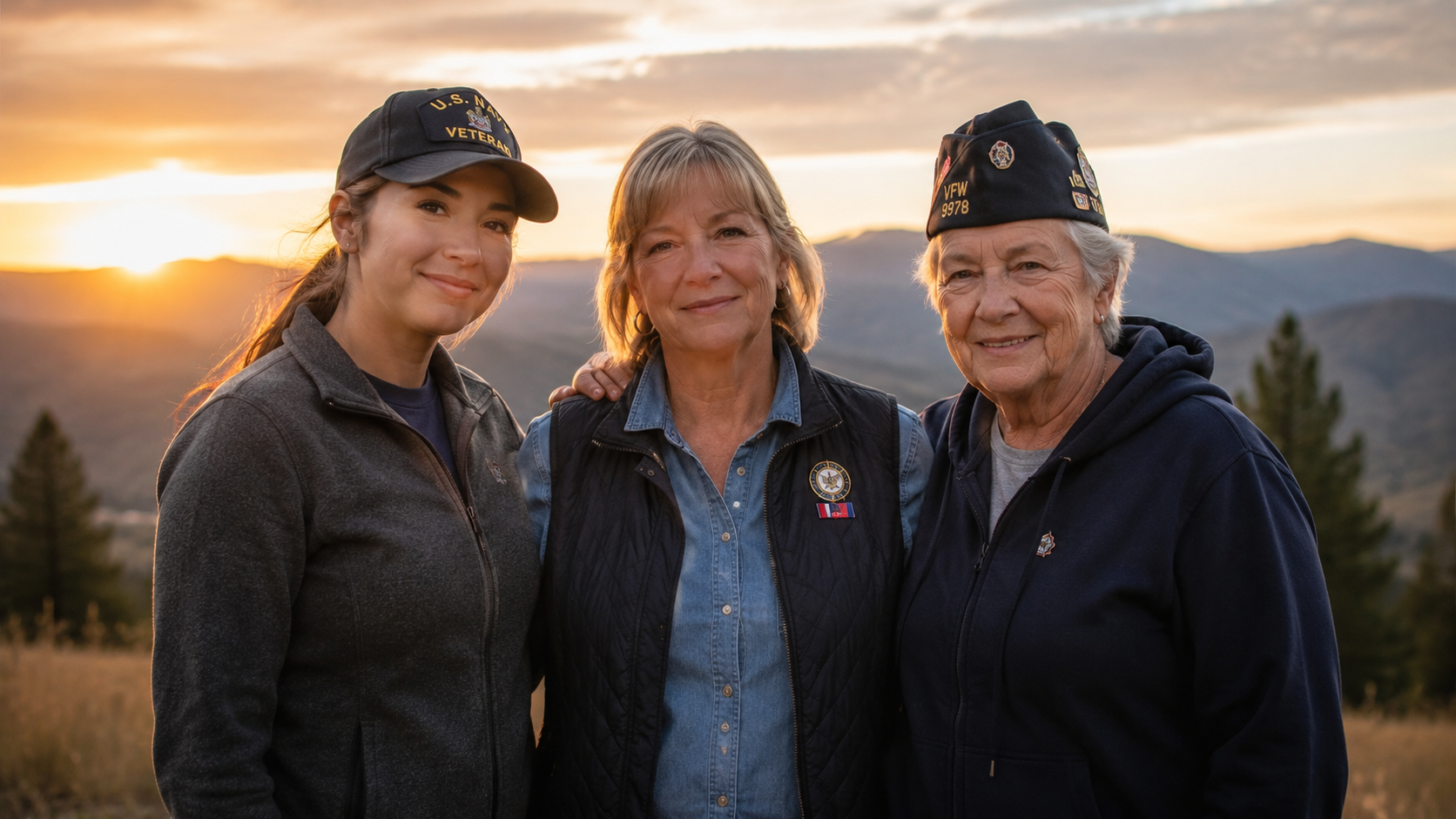
On June 12, we recognize **Women Veterans Day** — a day to honor the extraordinary contributions of women who have served in the United States Armed Forces. In Idaho and across the nation, women veterans have served with distinction in every branch of service, in every era of conflict, and in every role the military has asked of them.
Yet for too long, women veterans have been among the most underserved and least recognized members of the veteran community. Today, that changes — one conversation at a time.
By the Numbers
Women are the fastest-growing segment of the veteran population in the United States. Consider:
– Women make up approximately **10% of the total veteran population** nationally
– More than **2 million women veterans** are living in the U.S. today
– Idaho is home to thousands of women veterans, with concentrations in the Treasure Valley, eastern Idaho, and the panhandle
– Women veterans are **more likely to experience military sexual trauma (MST)** than their male counterparts
– Women veterans face **higher rates of homelessness** relative to non-veteran women
Despite these challenges, women veterans often underutilize VA and veteran services — frequently because they don’t identify themselves as veterans, face barriers to care, or find that services weren’t designed with them in mind.
The DAV of Idaho is committed to changing that.
The Unique Challenges Women Veterans Face
Women veterans often navigate a different landscape than their male peers:
Healthcare gaps. The VA has historically been designed around the needs of male veterans. While significant improvements have been made, women veterans still report barriers to gender-specific care, mental health services, and reproductive healthcare at VA facilities.
Invisible service. Many women veterans report that civilians — and sometimes other veterans — don’t recognize them as veterans at all. Being overlooked or dismissed when mentioning their service is a common and painful experience.
MST and PTSD. Military sexual trauma is a significant issue for women veterans and can lead to complex PTSD, depression, and challenges with trust. Specialized MST care is available through VA, and it is available to both women and men.
Caregiver burden. Women veterans are more likely to be primary caregivers for children or elderly family members, which can create additional barriers to seeking care and support.
Resources for Women Veterans in Idaho
Boise VA Medical Center — Women Veterans Program
The Boise VA has a dedicated Women Veterans Program Manager who serves as an advocate and point of contact for women veterans navigating VA care.
Call: **(208) 422-1000** and ask for the Women Veterans Program Manager.
VA Women Veterans Call Center
A confidential resource specifically for women veterans.
Call: 1-855-VA-WOMEN (1-855-829-6636)
Available Monday–Friday, 8am–10pm ET; Saturday, 8am–6:30pm ET.
Vet Centers
Idaho’s Vet Centers provide readjustment counseling and MST support in a community-based, non-clinical setting. Services are free and confidential.
DAVA — DAV Auxiliary
The DAV Auxiliary (DAVA) is open to spouses, family members, and supporters of DAV members — and plays a vital role in supporting veteran causes across Idaho. Women veterans themselves are welcome to join as full DAV members. [Learn more about joining DAVA.]
Honoring Idaho’s Women Veterans
If you know a woman veteran in Idaho, today is a perfect day to reach out and say: thank you for your service — and I see you.
If you are a woman veteran reading this: your service matters. Your sacrifice counts. And you deserve the full benefits and recognition that come with having served this country.
The DAV of Idaho is here to help you access every benefit you’ve earned. Contact our National Service Office at (208) 429-2140 or visit dav-idaho.org to connect with a service officer who can assist with your VA claims and benefits.
*To all the women who have worn this nation’s uniform — Happy Women Veterans Day. We honor you today and every day.*
*The DAV of Idaho serves all disabled veterans regardless of gender, era, or branch of service. Learn more at dav-idaho.org.*